Central Africa's green lung
Cameroon holds the largest share of Congo Basin forest outside the DRC — one of the planet's most significant terrestrial carbon sinks. An extraordinary opportunity for voluntary carbon markets.
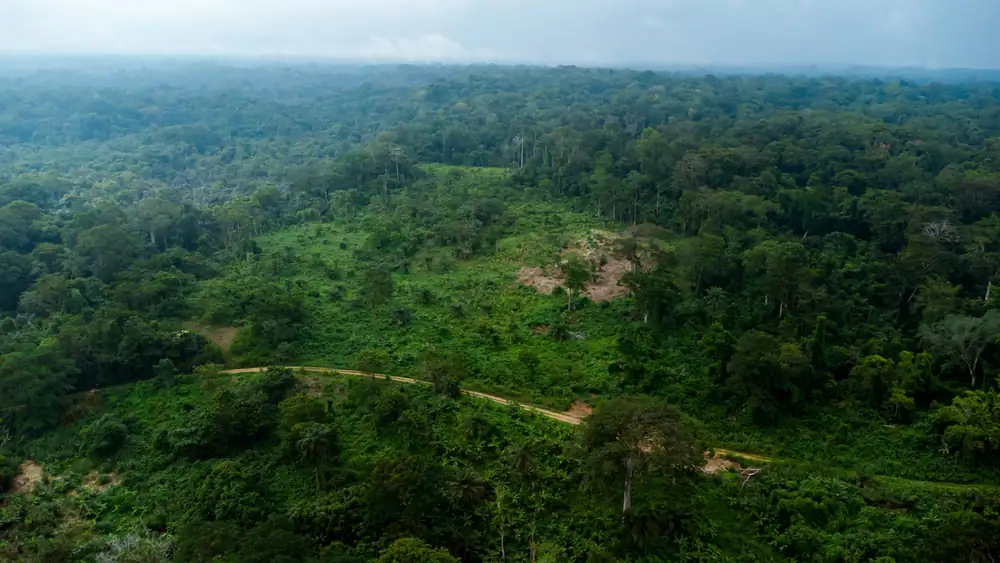
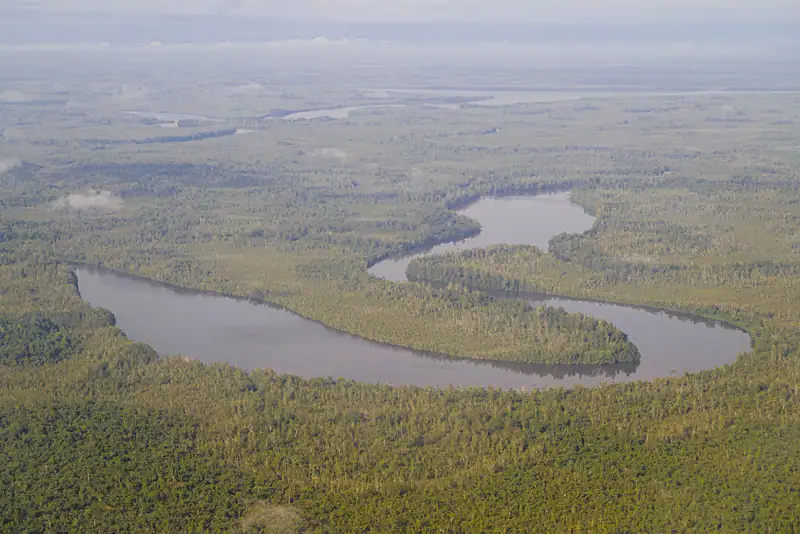
Carbon markets • CameroonRainforest canopy at Bodiman, Yabassi, Littoral Region, Cameroon
- Hectares of forest
- 22M
- Central Africa endemic species
- 90%
- Africa in tropical forests
- #2
- Enhanced NDC commitment
- 2035
The Fundamentals of Carbon Markets
One forest, one credit, one shared future
A carbon credit certifies that one tonne of CO₂ has been removed from the atmosphere or its release prevented. Governments, corporations, and investors purchase these credits to meet climate commitments, thereby funding the conservation of Cameroon's forests.
Protect & Restore
Existing forests are protected from deforestation and degraded areas are restored.
Measure CO₂
Experts measure and verify the quantity of carbon stored in forest ecosystems.
Certification
Bodies like Verra VCS certify and issue the verified carbon credits.
International Trade
Credits are sold on voluntary international markets to corporations and states.
Why This Is Critical for Cameroon
Cameroon sits at the heart of the Congo Basin, the planet's second green lung. Its dense tropical forests can generate some of the world's most valuable carbon credits, while preserving irreplaceable biodiversity and creating income for local communities.
From Forest to Verified Credit.
A carbon credit begins with land. It ends with internationally verified, tradeable certificates of climate impact. Here's every step in between.
Land Assessment & Eligibility
A site visit and satellite analysis determine whether the land qualifies — assessing forest cover, deforestation pressure, carbon density, and tenure security. Most forest areas in Cameroon qualify.
Baseline & Project Design
A scientific baseline establishes how much carbon the land currently stores, and how much it would lose without the project. This becomes the foundation of the Project Design Document (PDD) submitted to Verra or Gold Standard.
Independent Verification
An accredited third-party auditor validates the project methodology, carbon measurements, and community benefit structure. This independent verification is what gives the credits their market value.
Registry Registration & Credit Issuance
The verified project is listed on the Verra or Gold Standard public registry. Carbon credits — each representing one tonne of CO₂ — are issued as serial-numbered units that can be tracked, traded, and retired.
Sale & Community Revenue
Credits are sold to corporate buyers offsetting their emissions. Revenue flows directly to the project: covering operational costs, funding conservation activities, and distributing income to local landowners and communities.
Do you own forest or farmland in Cameroon?
We assess eligibility at no cost. Registration timelines vary by project type and scale.
Cameroon: Heart of the Congo Basin
Central Africa's richest forest
Cameroon is nicknamed 'Africa in miniature' for its extraordinary ecological diversity — from equatorial rainforests to savannas, from coastal mangroves to the highlands of Mount Cameroon.
Congo Basin Reforestation
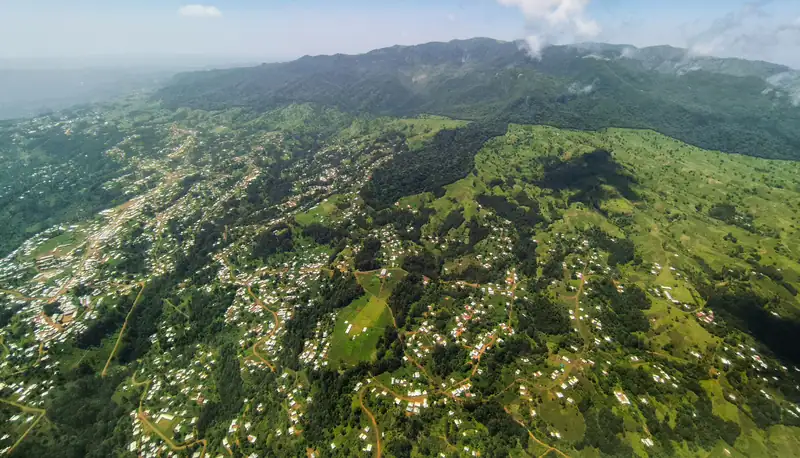
Cameroon holds 22 million hectares of tropical forest — the basis for a new generation of high-value reforestation and agroforestry carbon projects.
Ecological Diversity
Equatorial forests, savannas, coastal wetlands — each biome generates a unique carbon credit type.
Endemic Biodiversity
Lowland gorillas, chimpanzees, forest elephants — biodiversity increases carbon credit value.
Legal Framework
Cameroon's Forest Code and NDC policies support the development of voluntary carbon markets.
International Partnerships
Cameroon benefits from climate finance via COMIFAC, the EU, and the World Bank.
Forest Communities
Carbon projects can generate direct income for Baka and Bagyeli forest communities.
Global Demand. Cameroonian Forest.
Cameroon is the gateway to the Congo Basin — the world's second largest terrestrial carbon sink. European corporations subject to CSRD are looking for exactly this type of high-integrity credit.
| $18–55 | Per tonne — indicative market range, Congo Basin forests | Ecosystem Marketplace 2024 |
| 2.3 Gt | Carbon stocks in Cameroon's forests | FAO Global Forest Resources |
| CSRD | Significant European corporate demand driven by CSRD reporting requirements | EU CSRD 2024–2028 |
| 15× | Voluntary market growth forecast | Taskforce on Scaling VCMs |
Corporate Net-Zero Commitments
Over 9,000 companies worldwide have committed to Science-Based Targets. High-integrity carbon credits are the primary tool for addressing residual emissions that cannot be eliminated through operational changes.
Government NDC Delivery
54 African nations have Paris Agreement NDCs requiring measurable emissions reductions. Carbon credit projects generate the verified data and revenue streams that make NDC commitments deliverable in practice.
Mandatory Climate Disclosure
TCFD, CSRD, and SEC climate rules are making emissions reporting mandatory for large companies in Europe, the US, and increasingly the UAE. Verified carbon offsets are a key compliance instrument.
Cameroon's Carbon Credits Certified to the Highest Global Standards
Every project we register is independently certified by internationally recognised bodies.
- VCSLarge-scale forests
Verra Verified Carbon Standard
Cameroon holds one of Central Africa's largest pipelines of VCS-certifiable reforestation projects, with large-scale tropical forest areas that may be eligible subject to project-level assessment.
- GSSDG co-benefits
Gold Standard
Certification ensuring measurable SDG co-benefits for Cameroon's forest communities, particularly the Baka and Bagyeli peoples.
- CCBBiodiversity premium
Climate, Community & Biodiversity
Cameroon hosts lowland gorillas, chimpanzees, and forest elephants — CCB certification delivers a significant price premium for these habitats.
- GS-ARReforestation methodology
Gold Standard Afforestation & Reforestation
Gold Standard's AR framework requires independent verification of carbon additionality, permanence, and community co-benefits at every audit cycle — the methodology applied to reforestation projects in Cameroon.
- COMIFACRegional coordination
Central African Forest Commission
COMIFAC coordinates Congo Basin forest management at regional scale, providing a strong institutional framework for cross-border carbon projects.
- A6Switzerland agreement
Article 6 — Paris Agreement
Cameroon has signed an Article 6.2 bilateral agreement with Switzerland, enabling internationally transferred mitigation outcomes (ITMOs) from its territory. Negotiations with additional partners are ongoing.
Carbon Projects in Cameroon
Certified projects protecting forests and creating value for local communities.
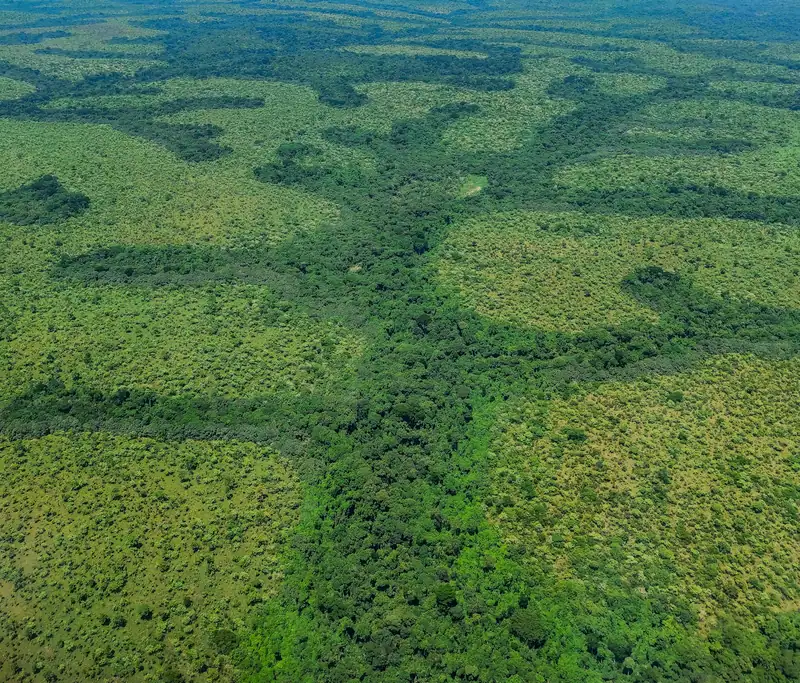
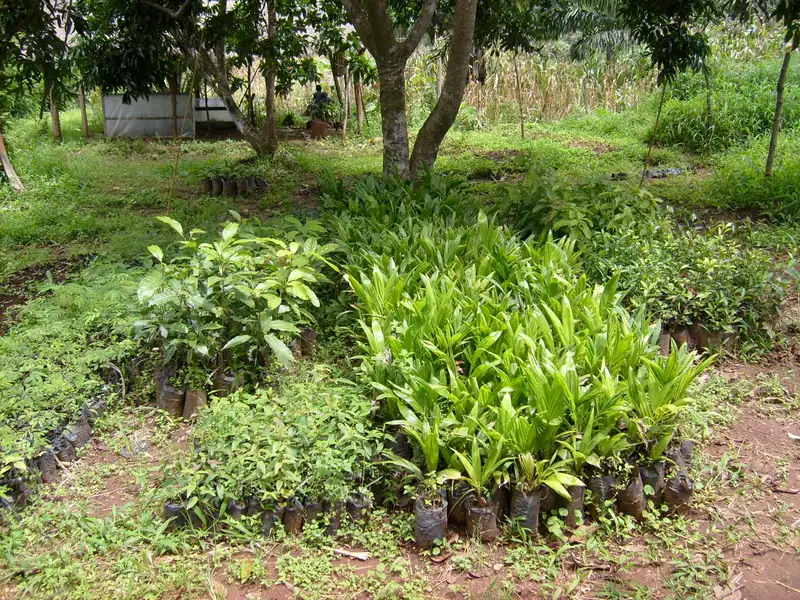
Reforestation Gallery forest in the savanna, Mbam and Djerem National Park, Cameroon Greenzone Reforestation Project
Verra VCS 4176 — 2,300–3,000 hectares, 16 million trees. Native, fruit and nut species combined for carbon + food security.
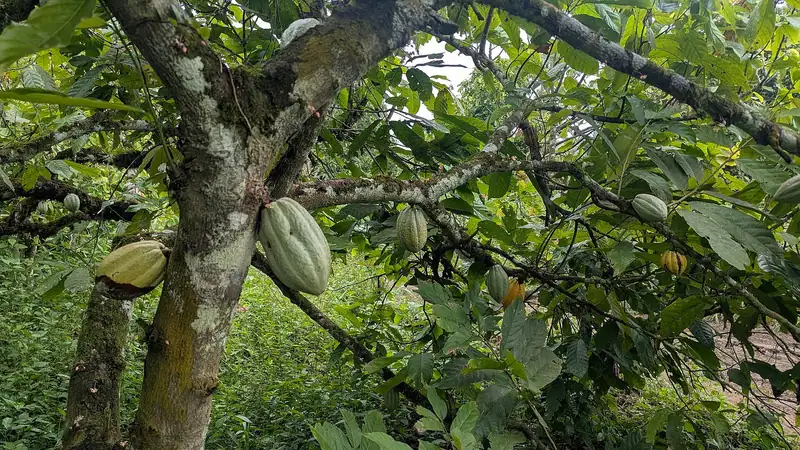
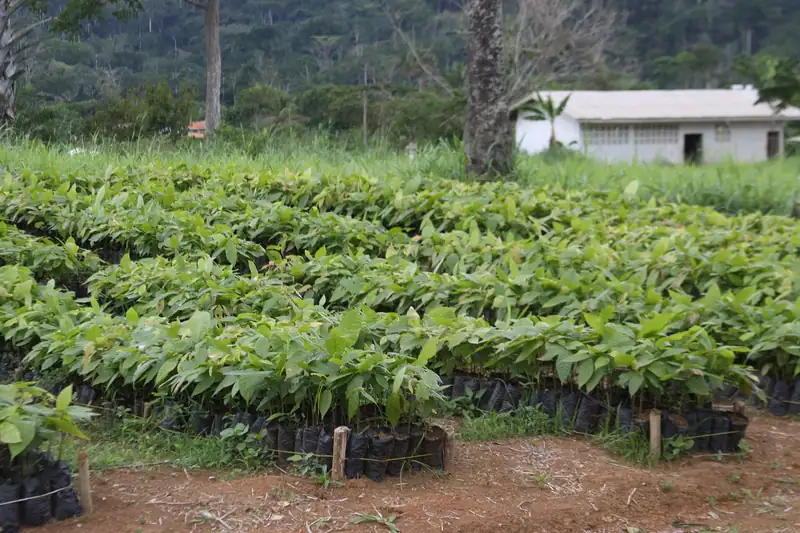
Pipeline Cocoa trees at the foot of Mount Cameroon, Buea Congo Basin Agroforestry
Scoping underway for large-scale agroforestry carbon in Cameroon's Congo Basin forest corridor, building on the Greenzone methodology.
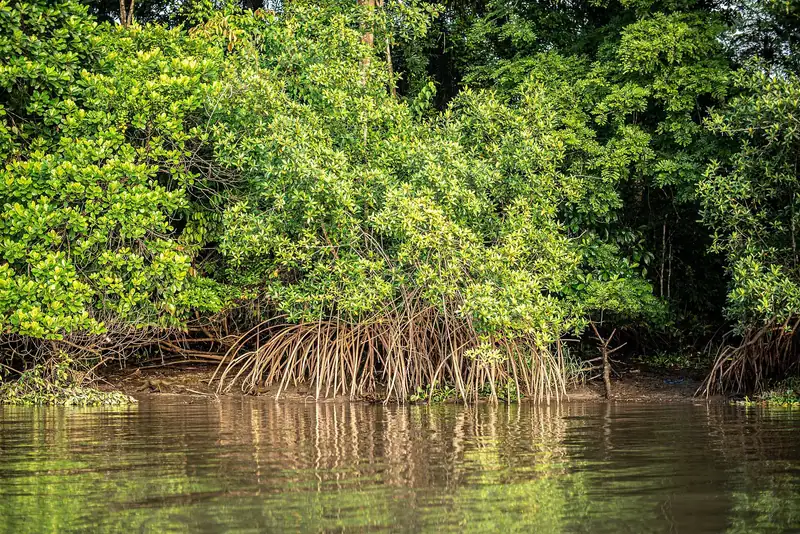
Pipeline Mangroves on the Wouri, on the way to Njebalè island, Littoral Region Cameroon Blue Carbon
Preliminary assessment of mangrove and coastal wetland carbon opportunities along Cameroon's Atlantic coastline.
Greenzone Reforestation Project, Cameroon
Green Earth Group's Cameroon project — reforesting the Congo Basin edge with 16 million native and fruit trees.
The Greenzone Reforestation Project (Verra VCS 4176) is Green Earth Group's development-phase carbon project in Cameroon. Located in the Yoko Sub-Division of Cameroon's Centre Region — at the edge of the Congo Basin forest system — the project will plant 16 million trees including indigenous species, fruit trees, and nut-bearing varieties, combining carbon sequestration with direct food security benefits for local communities.
- Verra Registry
- VCS Project ID 4176
- Project Area
- 2,300–3,000 hectares
- Trees to Plant
- 16 million (indigenous + fruit/nut)
- Expected Credits
- ~100,000 tCO₂e / year
- Status
- Development phase
- Location
- Yoko, Centre Region, Cameroon
Project Targets
- Trees to be planted
- 16M
- Hectares under reforestation
- 3K
- Expected tCO₂ over project lifetime
- 4M
- Projected first credit issuance
- 2026
Cameroon Carbon Market Insights
Perspectives on carbon market developments, forest policy, and regional opportunities in Central Africa.
Top Carbon Credit Projects in Cameroon — 2026 Guide
What are the most significant carbon credit projects in Cameroon in 2026? REDD+, blue carbon, improved cookstoves — here are the projects generating certified credits in the Congo Basin forests.
Registering a VCS Project in Cameroon: A Step-by-Step Guide
From initial design to first credit issuance, here are the concrete steps, costs, and timelines for registering a Verra VCS REDD+ project in Cameroon's forests.
Blue Carbon in Cameroon: Atlantic Mangroves as a Carbon Asset
Cameroon holds approximately 270,000 hectares of mangroves along its Atlantic coast. These coastal ecosystems can generate some of the most valuable credits in the voluntary carbon market — and an exceptional biodiversity premium. Here's what developers and investors need to know.
In-depth reports, buyer guides, and market analysis
Market intelligenceCarbon Finance in Cameroon
The Congo Basin is the world's second largest tropical forest and one of the most significant carbon sinks on Earth — absorbing over 1.5 billion tonnes of CO₂ annually. Cameroon's forests represent approximately 20% of the Congo Basin's total area, storing billions of tonnes of carbon in biomass and soil.
Cameroon has concluded one of the first Article 6.2 cooperation agreements on the African continent with Switzerland, enabling internationally transferred mitigation outcomes (ITMOs) from Cameroonian territory. Each transferred credit is subject to a corresponding adjustment, ensuring it is counted only once globally. Bilateral negotiations with additional European partners are ongoing.
Projects operate under Verra's Verified Carbon Standard (VCS) or Gold Standard, with national homologation from the Ministry of Environment. The CAFI (Central African Forest Initiative) framework provides an additional layer of assurance for REDD+ projects across Central Africa.
Cameroon's forest law requires free, prior, and informed consent (FPIC) from all communities in project areas. Carbon projects in Baka-inhabited zones are structured to distribute a direct share of credit revenues to communities, typically through village-controlled community development funds.
Green Earth Group develops and manages high-integrity carbon projects in Cameroon's forests, partnering with local communities, conservation NGOs, and the Cameroonian government. All projects are structured to comply with the CAFI framework and national regulatory requirements.
Start the Conversation
We partner with public institutions, international investors, landowners and project developers in Cameroon and Central Africa.
Public Institutions
Carbon policy support and national NDC implementation assistance.
International Investors
Investment opportunities in Cameroon's verified carbon credits.
Landowners
Transform your forest or land into a sustainable carbon revenue source.
Project Developers
Technical support and access to international carbon markets.